At John Fletcher of Madeley Primary School, we use Read Write Inc. (RWI) to develop confident, fluent readers and writers from the very start of their school journey. Through daily phonics teaching, children learn to read accurately, write confidently and build a strong foundation for future learning.
We believe that reading is the key to unlocking the curriculum. By learning to read fluently, children can focus on understanding, enjoying and learning from what they read, while developing the skills to communicate their ideas effectively through writing.
Reading
Children will:
- Learn the 44 sounds of the English language and the letters or letter groups that represent them.
- Blend sounds together to read words accurately and fluently.
- Read engaging, carefully matched stories containing sounds and words they have already learned.
- Develop their comprehension skills through meaningful discussion and questioning about the texts they read.
Meet Fred the Frog!
 |
Fred is our Read Write Inc. friend and mascot. Fred can only speak in sounds, so the children help him blend sounds together to make words. For example, Fred says ‘c-a-t’ and the children blend the sounds to hear the word ‘cat’.
This approach, known as ‘Fred Talk’, helps children develop the essential blending skills needed for reading. We also teach children to pronounce sounds clearly and purely, saying ‘c’ rather than ‘cuh’, helping them become confident and accurate readers.
|
Blending
One of the most important skills in learning to read is blending. In Read Write Inc., children learn to read words by using ‘Fred Talk’, where sounds are blended together to make a word. For example, c-a-t becomes cat and sh-o-p becomes shop.
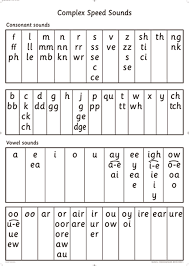
Children practise blending the sounds they have learned from the Speed Sounds set, helping them to read unfamiliar words with increasing confidence and fluency. When supporting your child at home, encourage them to say the pure sounds clearly (‘m’ not ‘muh’, ‘s’ not ‘suh’) before blending them together to read the whole word.
Watch the video below to see how blending works and how you can support your child’s reading at home.
https://schools.ruthmiskin.com/training/view/hqHOTyBV/JM5AcRgH
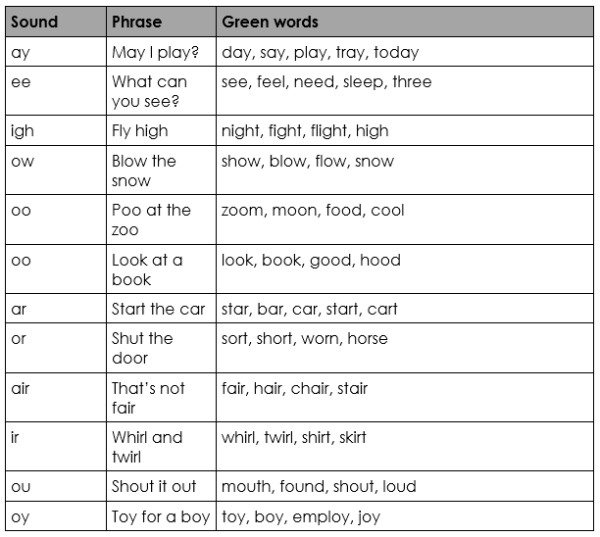
Green words
Green Words are words that can be sounded out using the phonics knowledge children have already learned. These fully decodable words help children practise and apply their reading skills with confidence.
As children regularly read and revisit Green Words, they become increasingly fluent and begin to recognise many of them automatically. This growing bank of familiar words helps children to read more accurately, develop confidence and apply their phonics knowledge to read new words more independently
https://schools.ruthmiskin.com/training/view/WTa4eCi2/JAVNjONv
Red words
Red Words are words that cannot be fully sounded out using a child’s current phonics knowledge and therefore need to be learned by sight. For example, the word ‘the’ contains a sound pattern that children may not yet have learned, so it cannot be decoded using their usual phonics strategies.
Children practise reading and spelling Red Words regularly so that they become familiar and can recognise them automatically. Some words remain Red Words only until a particular sound has been taught, while others are considered tricky because they are pronounced differently from how they may appear to be decoded.
https://schools.ruthmiskin.com/training/view/r5eMWOnw/JBabLoGu
rwi_RPho_RWs-progression-chart
Nonsense Words
Nonsense Words (sometimes called alien words) are made-up words that help children practise and demonstrate their phonics skills. As these words have no meaning, children must rely entirely on their knowledge of sounds and blending to read them accurately.
Reading nonsense words helps children develop strong decoding skills and gives teachers a reliable way to assess how well children can apply their phonics knowledge to unfamiliar words. While nonsense words play an important role in phonics teaching and assessment, they are only one small part of the Read Write Inc. programme.
Below are some examples of nonsense words that children may encounter at different stages of Read Write Inc. These examples are intended to illustrate the types of words used, although many different nonsense words can be created.
rwi_RPhO_NW_Set_1
rwi_RPhO_NW_Set_3
Writing
Children will:
- Learn to form the letters and letter groups that represent the 44 sounds of the English language.
- Spell words using their growing knowledge of sounds and graphemes.
- Develop and rehearse sentences orally, using increasingly ambitious vocabulary.
- Progress from writing simple sentences to composing longer and more complex pieces of writing.
- Write for a range of purposes using high-quality discussion and language-rich prompts.
Set 1 Sounds
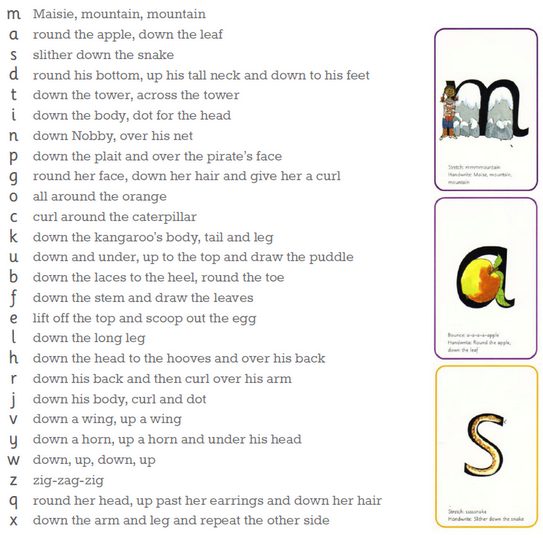
Set 1 sounds are taught in the following order together with rhymes to help children form the letters correctly and instantly recognise sounds ready for blending. We do not use letter names at this stage.
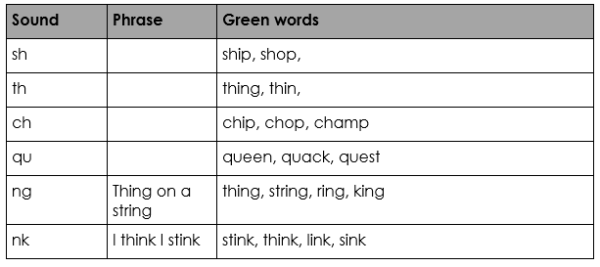
Set 1 Special Friends (digraphs)
Set 2 Sounds
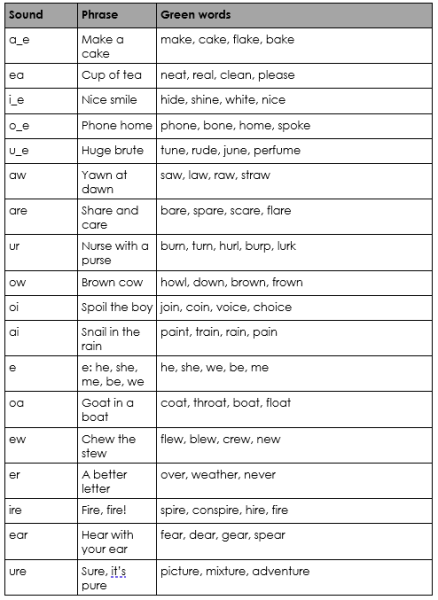
The children are then taught Set 2 Sounds – the long vowels. When they are very confident with all of set 1 and 2 they are taught Set 3 Sounds.
Set 3 Sounds